Why Her Basics Look Expensive: The Neutral Elevation Checklist
Quick Answer: Basics look expensive because of four things, none of which is price: fit (hems tailored to the shoe, shoulder seams on the shoulder), fabric weight (hold it to the light — if you can read through a white tee, it will read cheap), finish (matte over shine, no pilling, pressed), and grooming. Clean shoes and a hemmed trouser will do more for the look than doubling your budget.
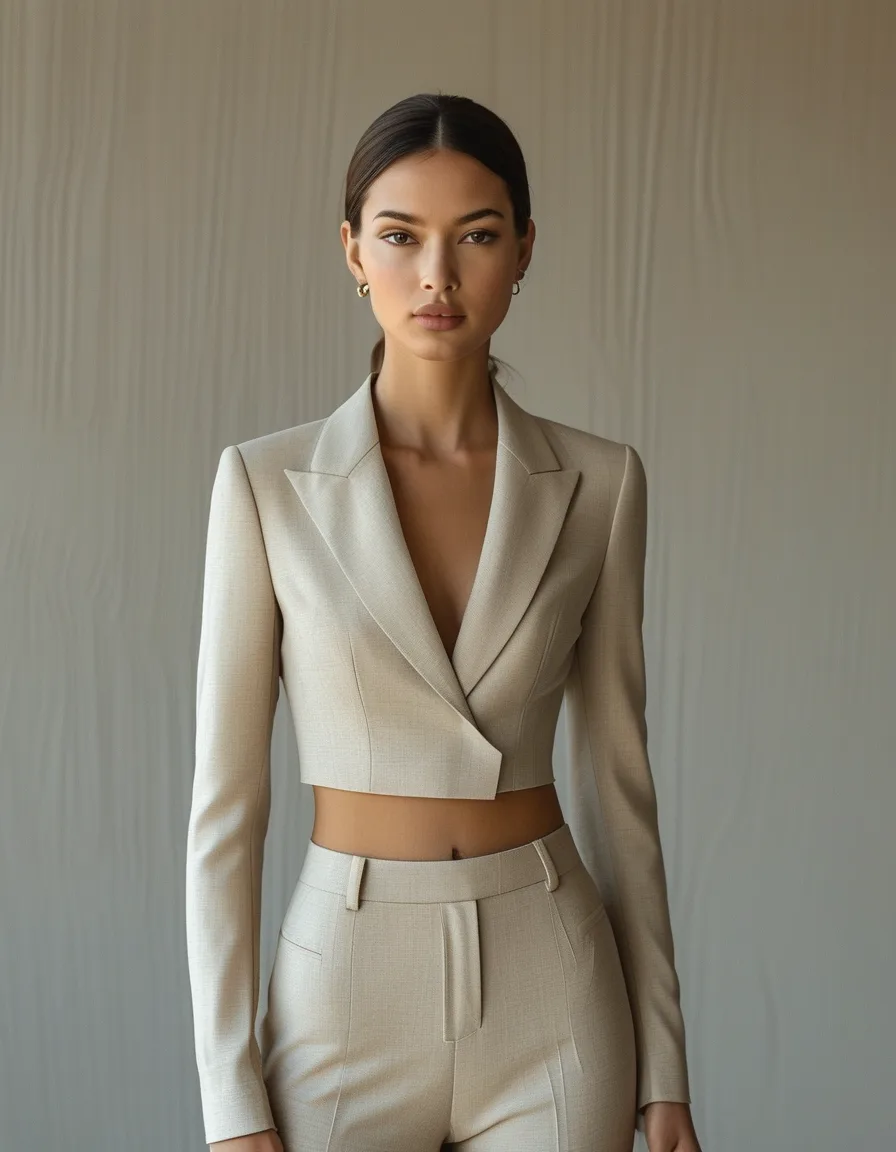
You know the woman. White tee, beige trousers, flat sandals — and somehow it reads like a campaign shoot while your version reads like laundry day.
The frustrating part is that she is very often not spending more than you. She’s running a checklist.
Here it is, itemized.

Why Does Fit Matter More Than Price?
Because the expensive read is mostly the absence of fit-noise.
Your eye registers a dragging hem, a shoulder seam sitting two inches down the arm, a waistband gaping at the back — it registers them before it registers the fabric, the color, or the brand. Every one of those is a small signal that says this garment wasn’t chosen for this body.
The three that matter most:
Hem to the shoe. Trousers should break just barely, or graze the top of the shoe you’ll actually wear them with. This is the highest-return alteration in the entire wardrobe and a tailor charges roughly the price of two coffees.
Shoulder seam on the shoulder bone. The one thing on a top you truly cannot fix later.
Skimming, not clinging. A tee should follow the body’s line without mapping it. If it grips at the midsection, size up and have the length adjusted — the drape does the work.
The fanciest fabric on earth cannot outrun a hem dragging on the pavement.
What Are the Fabric and Finish Tells?
The hold-to-light test settles most of it in three seconds.
Weight and opacity. Hold a white or light tee up to a window. If you can clearly see your hand through it, so can everyone at the party. Substantial cotton — around 180–200 gsm for a tee — holds its shape, keeps its neckline, and reads as an object rather than a wrapper.
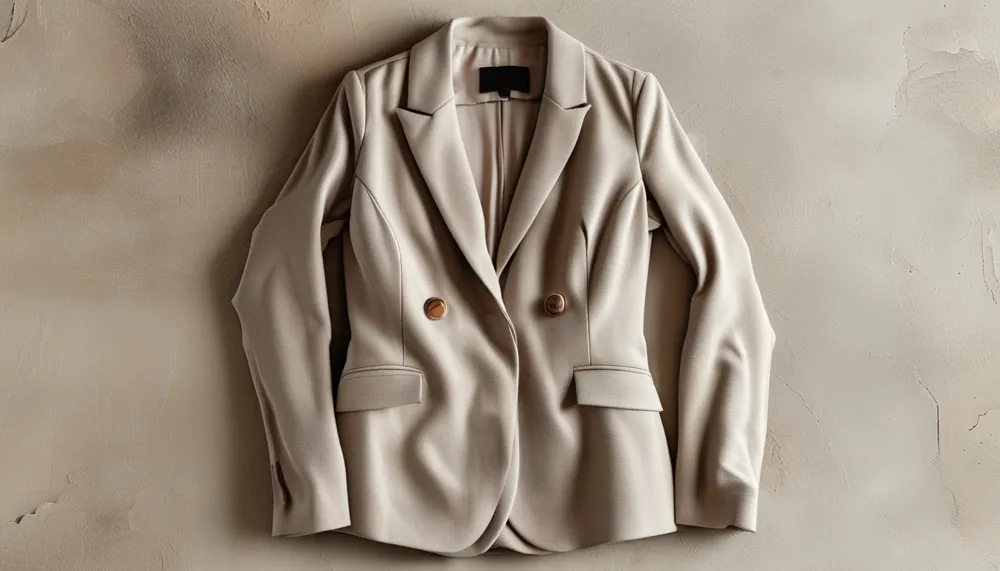
Matte over shine. Cheap synthetics gleam. Matte cotton, brushed wool, dry crepe, and washed linen all absorb light instead of bouncing it, and absorbed light is the entire visual difference between “elevated” and “fast fashion.”
Neckline recovery. Stretch the collar gently and let go. If it stays stretched, that garment is a six-wash purchase.
Pilling. Under the arms and along the sides is where it starts. A £5 fabric shaver resurrects half of what’s already in your drawer, and it’s the single cheapest upgrade on this list.
The wrinkle audit. Not all creases are equal — linen’s wrinkles read rich, polyester’s read tired. Steam or press anything that isn’t deliberately rumpled. Five minutes with a steamer beats a new top.

Does Grooming Really Change How Clothes Read?
It’s the multiplier, and it’s the half of the checklist that isn’t in the closet at all.
The exact same beige outfit reads completely differently on someone with deliberate hair, tended nails, and a finished face. Not a full face — a finished one. In every “how does she look so expensive” analysis ever written, grooming is the constant.
The realistic version is about five minutes: hair that looks decided rather than survived, nails short and clean (unpolished is entirely fine — chipped is not), brows tidy, skin moisturized, and one thing that says the mirror was consulted.
The basics are the canvas. Grooming is the signature in the corner.
5 Mistakes Everyone Makes With “Elevated Basics”
- Dirty shoes. The loudest single expensive-or-not signal below the ankle, and the most ignored. White sneakers with grey midsoles undo a perfectly good outfit. Ten minutes and a magic eraser, weekly.
- Mixing metals by accident. Gold watch, silver earrings, and a rose-gold bag reads unplanned. Matching them reads deliberate — and deliberate is the whole effect you’re buying.
- Buying five mediocre tees instead of two good ones. A drawer of thin, stretched, slightly-off-white tees is worse than owning two heavy ones you rotate.
- Over-accessorizing to compensate. One quality piece doing the talking — a good watch, a structured bag, real leather with visible grain — beats four small ones competing.
- Ignoring posture. It’s free, it’s instant, and it changes how every single garment hangs. Shoulders back and down, chin level. No purchase required.
The Detail Economy
The final reads, in the order people notice them:
Shoes (are they clean and are they in good repair), bag (does the leather look like leather, does it hold its shape), hem (does anything drag or bunch), metals (do they agree with each other), posture (does the person look like they meant this).
Notice what isn’t on that list: labels, price, and season. Almost none of it is expensive. Almost all of it is maintenance.
The expensive look was a checklist, not a receipt — and every line item costs more attention than money.
Frequently Asked Questions
What are the best neutral colors for looking expensive?
Deep-toned neutrals photograph and wear richer than pale ones: charcoal, chocolate, camel, bone, and olive. Very pale grey and washed-out beige are the hardest to pull off, because thin fabric and light color together expose every flaw in weight and fit.
Is it worth paying for tailoring on cheap clothes?
Almost always, if the piece is good in every way except fit. Hemming trousers, taking in a waist, and shortening sleeves cost far less than the difference between a budget and a mid-range garment, and fit is what your eye actually reads. Tailoring won’t rescue thin, shiny, or badly-cut fabric though — that’s a different problem.
How do I make a white t-shirt look expensive?
Buy weight, not brand — around 180–200 gsm, opaque against the light, with a ribbed neckline that recovers. Wash it inside out in cool water, skip the dryer, and retire it the moment the collar goes wavy or the white goes grey. A crisp heavy white tee is one of the highest-value items in a wardrobe and one of the shortest-lived.
TL;DR:
- Fit first: hem to the shoe, shoulder seam on the shoulder, skimming not clinging.
- Hold fabric to the light — opacity and weight are the difference between elevated and cheap.
- Choose matte over shine; press or steam everything that isn’t deliberately linen.
- Grooming is the multiplier: five minutes of deliberate hair, nails, and skin.
- Clean shoes and matched metals are the loudest cheap wins available.
- A fabric shaver, a tailor, and a steamer beat a bigger budget almost every time.
Keep Reading
This article is for general styling and informational purposes only. Trends, sizing, availability and pricing may vary by brand and season.